Posts

Clustering Environment with Tomcat
Image
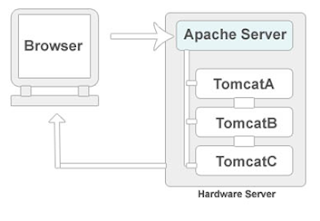
Configuring Clustering Environment in Tomcat7 What is Clustering : Connecting two or more computers together in such ways that they behave like a single computer. Clustering is used for parallel processing, load balancing and fault tolerance. Clustering is a popular strategy for implementing parallel processing applications because it enables companies to leverage the investment already made in PCs and workstations. In addition, it's relatively easy to add new CPUs simply by adding a new PC to the network. There are two types of clustering is possible 1.        Vertical Clustering 2.        Horizontal Clustering Vertical Clustering: installing multiple Java application servers on a single physical machine Horizontal Clustering: Horizontal clustering involves running multiple Java application servers that are run on two or more separate physical ma...

JDK7 Highlights & Hashing Techniques

Image
Seven New Features in Java(JDK 7) Programming Language 1.     Binary Literals In Java SE 7, the integral types ( byte ,   short ,   int , and   long ) can also be expressed using the binary number system. To specify a binary literal, add the prefix   0b   or   0B   to the number. The following examples show binary literals:  int a=010; // will give 10   (upto JDK6)  int b=  ob 010 ;  will give 2. ( in JDK7 it will consider as binary literal) 2.     try with resource statement try ( Autoclosable Implementation class ) {}   Any object which implements AutoCloseable/ Cloneabl interface can be passed to try(){} block. but this no where related to try catch Exception handling one. this is useful for IO Streams ,JDBC where we need to close the connections after using it. try() will take care of closing operations.  class MyCustomClosable implemen...